Newsletter Subscribe
Enter your email address below and subscribe to our newsletter

 ByJohn A
Artificial intelligence for soil analysis integrates probabilistic modeling, multi-source data, and scalable pipelines to quantify uncertainty and support governance across disciplines. Data fusion combines proximal sensors, remote sensing, and lab assays to reveal composite soil-health indicators. Machine learning translates lab signals into field-ready prescriptions, with emphasis on interpretability, ethics, and reproducibility. The challenges of accuracy, transparency, and decision-mability invite scrutiny of methods and outcomes as practitioners seek robust, actionable insights. The path forward remains contingent on validation and governance.
Artificial intelligence is increasingly integrated into soil analysis, transforming data collection, interpretation, and decision-making across disciplines. Current deployments quantify soil uncertainty with probabilistic models, enhancing uncertainty bounds and risk assessment.
Interdisciplinary collaboration informs model governance, ensuring transparent validation and accountability. Computational pipelines enable scalable, reproducible analyses, while field validation links sensors, imagery, and laboratory assays to actionable recommendations for sustainable land management.
Data fusion integrates heterogeneous soil datasets—from proximal sensors, remote sensing, and laboratory assays—to reveal composite indicators of soil health that surpass the informativeness of any single modality. This integrative approach yields robust, cross-validated metrics, enabling nuanced interpretation across spatial scales. By combining signals, data fusion clarifies soil health, supporting rigorous assessment, cross-disciplinary collaboration, and transparent decision-making.
Laboratory measurements of soil properties—such as nutrient concentrations, pH, texture, and microbial biomarkers—provide precise, benchmark data that anchor field-informed decisions.
Machine learning translates lab-derived signals into actionable prescriptions at scale, balancing predictive accuracy with interpretability.
Data ethics guides data handling and consent in practice, while model deployment translates insights into adaptive field management, ensuring robust, transparent decision support for diverse agricultural contexts.
Evaluating AI tools for soil analysis requires a rigorous appraisal of accuracy, transparency, and decision-mability across diverse agricultural contexts. The assessment combines quantitative metrics and qualitative signals to compare models, data provenance, and reproducibility. Key components include accuracy evaluation performance across crops and soils, and adherence to transparency criteria, enabling external validation, auditability, and informed, disciplined adoption by practitioners seeking autonomy and reliability.
AI approaches quantify soil uncertainty under field conditions by propagating data gaps and irregular sampling through probabilistic models, revealing robust parameter estimates; interdisciplinary methods integrate sensor, pedon, and remote data, guiding adaptive sampling and decision-making in freedom-seeking practitioners.
Satirically, the field contends with ethics of privacy and bias mitigation; researchers insist data stewardship, transparency, and interdisciplinary safeguards guide AI in soil data use, balancing freedom to innovate with rigorous, data-driven privacy protections and equitable outcomes.
See also: What Is a Crypto Exchange and How Does It Work?
AI addresses data gaps from irregular sampling by applying AI calibration to interpolate values, quantify uncertainty, and analyze field variability, using uncertainty quantification and sampling gaps as core inputs; results support rigorous, data-driven, interdisciplinary decision making for flexible, freedom-minded stakeholders.
Yes, AI can forecast long-term soil carbon changes but with substantial predictive uncertainty; model interpretability remains essential, enabling interdisciplinary scrutiny and informed decisions for audiences seeking freedom. Exaggerated scope aside, results demand rigorous validation and transparent reporting.
Robust soil models require diverse, representative data spanning soils, climates, management, and depths; data augmentation and transfer learning enhance generalization, enabling transfer across domains while preserving ecological realism and interdisciplinary rigor for an audience seeking freedom.
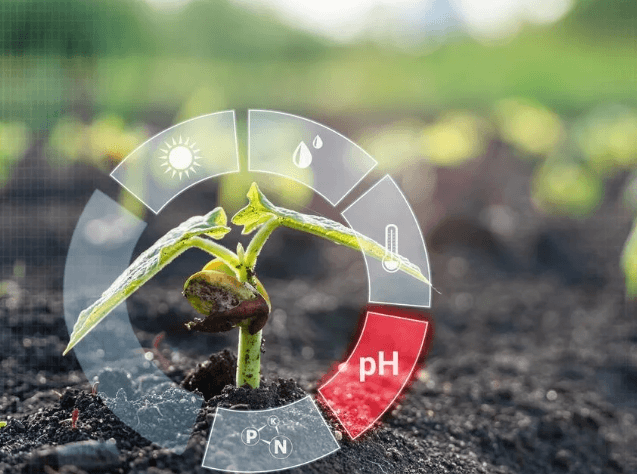
Artificial intelligence for soil analysis integrates diverse data streams to produce probabilistic, interpretable indicators of soil health. Across sensors, imagery, and labs, fusion reduces uncertainty and reveals robust patterns that single modalities miss. Machine learning translates complex signals into actionable management. Evaluative criteria—accuracy, transparency, and decision-readiness—anchor trustworthy practice. As a visual metaphor, AI acts as a compass within a dense soil matrix, guiding stakeholders toward sustainable pathways despite hidden variability.